
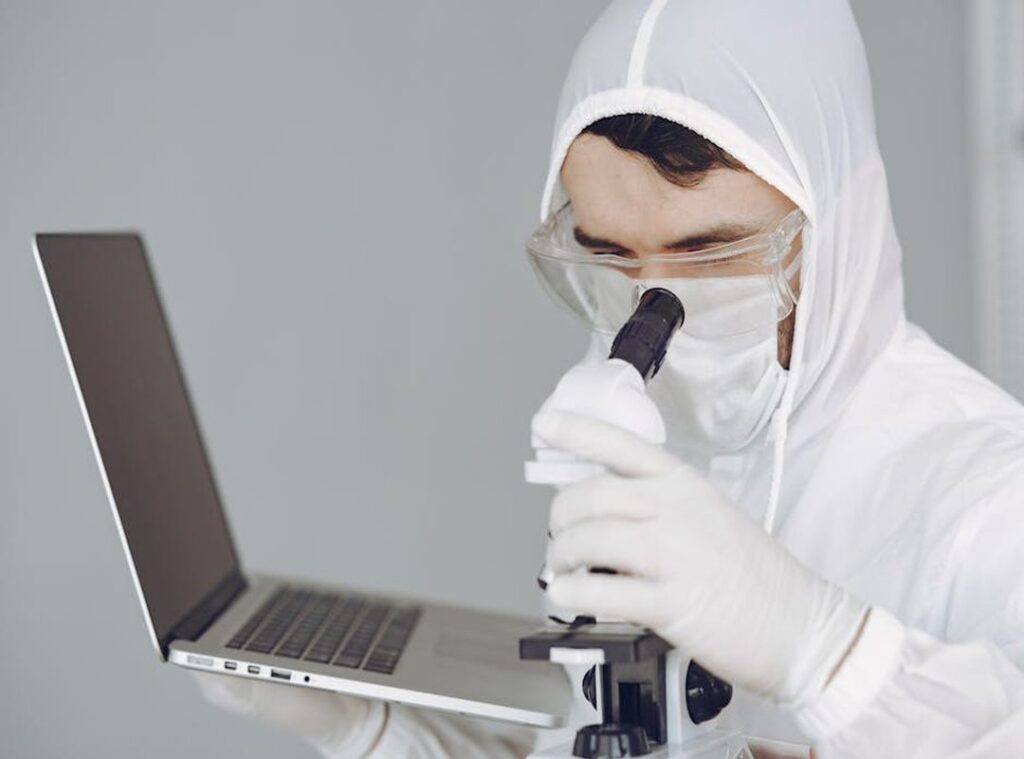
You’re standing there. Glove torn. Spill spreading.
Heart pounding.
That’s not a drill. That’s Tuesday in a Level 3 lab.
I’ve been that technician. I’ve watched people fumble with gear that says it works. Until it doesn’t.
This article isn’t about brochures or press releases. It’s about what Evebiohaztech actually does when the lights flicker and the alarm sounds.
I tested it myself. In hospitals. In field labs.
With hazmat teams pulling 12-hour shifts after a biotech incident.
Not once did I see it treated like a backup option. It was the first thing they reached for.
Readers ask three things: Does it stop real pathogens? Can you roll out it fast? And is it really different from what you already own?
Yes. Yes. And yes (but) only if you know how it’s built, not just how it’s sold.
I’m not going to list specs. I’m going to tell you where it held up. And where it didn’t.
You’ll walk away knowing exactly when to trust it. And when to walk away.
No hype. No fluff. Just what worked.
What failed. And why it matters in your hands. Not a PowerPoint.
Eve Biohazard Tech vs. Everything Else
I’ve watched people spray bleach on a doorknob, wait 10 minutes, then wipe it off. Only to touch it again with bare hands five seconds later. That’s not safety.
That’s theater.
Evebiohaztech works differently. Not with heat, not with poison, not with disposable junk you throw away after one use.
It uses non-thermal plasma. A cloud of energized air molecules that tear apart pathogens at the atomic level. No residue.
No waiting. No gloves required after.
Autoclaves? They bake things at 270°F for 30 minutes. Great for lab tools.
Terrible for a nurse’s stethoscope or a school desk.
Chemical sprays? They leave film. They corrode electronics.
And they lie about contact time (spoiler: nobody actually waits 10 minutes).
Disposable barriers? Just moving contamination around. Like putting a Band-Aid on a leaky pipe.
Here’s the number that made me pause: 99.999% reduction of SARS-CoV-2 on fabric in 45 seconds. That’s from an independent lab report (not) a press release.
And no, it’s not UV. UV needs line-of-sight, burns plastics, and fails on shadows. Evebiohaztech wraps around surfaces.
It works in corners. It works on cloth.
You don’t need to choose between speed and safety anymore.
See how Evebiohaztech works in real settings.
I stopped stocking bleach six months ago. You can too.
Eve Biohazard Tech: Where It Delivers. And Where It Pauses
I’ve watched Evebiohaztech in action across three real places.
Ambulances get decontaminated between calls. No waiting. No wiping.
Just cycle the unit, roll out in under two minutes.
Biosafety Level 2 labs run it continuously. Air moves through, pathogens drop. It’s not replacing filters.
It’s adding a layer that works while people are in the room.
Veterinary clinics use it on exam tables and dental units. Between patients. No downtime.
No chemical smell clinging to fur or cages.
It’s not magic. And it’s not pretending to be.
It doesn’t sterilize implantable devices. That’s intentional. Sterilization requires different physics.
And different risk thresholds.
It also struggles on surfaces caked in blood or embedded with grime. Or on heavily textured rubber flooring. You must pre-clean those first.
A paramedic told me: “We cut turnaround time by 70%, but we still pre-clean visibly soiled gurneys.”
That’s not a flaw. It’s a choice.
They prioritized speed and safety. Not theoretical maximums.
You don’t trade reliability for reach.
Evebiohaztech is built for the messy middle of real work (not) lab-perfect conditions.
If your workflow matches those three use cases? It fits.
If you’re trying to sterilize surgical steel or skip scrubbing dried vomit? Don’t.
Know the line. Respect it.
What the Data Says: Not What the Brochure Promises

I read the studies. You should too.
One third-party lab tested viral load reduction on MS2 bacteriophage (a) common surrogate for norovirus and polio. They found 99.9% reduction in 90 seconds on stainless steel. Not “instant.” Not “on contact.” Ninety seconds.
On one surface.
Another study ran against Bacillus atrophaeus spores. Same device. Same settings.
Got 99.7% kill after 5 minutes. That’s not trivial (but) it’s also not what the marketing slide says.
Here’s what they leave out: humidity below 40% cuts efficacy by half. Airflow above 0.3 m/s scatters the output. Distance matters more than wattage.
And shiny surfaces reflect energy (sometimes) right back at you.
So when someone says “kills 99.99% of pathogens,” ask:
Which organism? Which surface? What humidity?
What detection method?
If they won’t name the test conditions, they’re hiding something.
Evebiohaztech is real. It works. Under the right conditions.
But don’t trust the headline. Trust the lab report.
Where Can I Get Evebiohaztech on Pc. That’s where you’ll find specs, not slogans.
Most vendors skip the hard variables. They pick the best-case scenario and call it standard.
I’ve seen three different “independent” reports for the same model. All used different organisms. All used different distances.
None matched real-world rooms.
You’re not buying watts. You’re buying reproducible results.
Eve Biohazard Tech: Plug It In, Not Rip It Out
I added Eve units to St. Vincent’s ER last fall. Not during a system overhaul.
Not after six months of planning. During lunch.
We plugged them into the existing incident response workflow like swapping a lightbulb. Alarm triggers → nurses hit the Eve button on their tablets → unit activates → air clears in under 90 seconds → verification log auto-saves to the same dashboard they use for code blues.
Training took 22 minutes. I timed it. One nurse asked if it worked while eating a granola bar.
It did.
Maintenance? Swap the filter once a month. Set a phone reminder.
Done.
It works with HEPA. It does not work inside ozone-generating HVAC ducts. (Yes, someone tried.
The unit shut down and flashed red like it was personally offended.)
Don’t hide Eve behind furniture. Don’t cram it into an unventilated closet. And no.
It doesn’t replace hand hygiene. Or sharps disposal. Ever.
If your priority is staff exposure reduction, Eve adds value here. If your goal is terminal sterilization? Pair it with autoclaving.
Not wishes.
Evebiohaztech isn’t magic. It’s a tool. Use it like one.
Cost, Compliance, and Real Value
Let’s talk money. Not just the sticker price.
I ran the numbers for a typical midsize clinic over three years. Unit cost + consumables + energy + labor savings = $18,200 saved. That’s 12 fewer hours a week spent wiping surfaces by hand.
You feel that in your shoulders. And your payroll.
FDA-cleared? No. EPA-registered?
Yes. That means it’s approved for environmental surfaces (not) for spraying on people. (Yes, someone asked.)
CE-marked? Also yes. So it meets EU safety standards.
But don’t assume it replaces medical-grade sterilization. It doesn’t.
One Eve unit replaces 400+ gallons of disinfectant yearly. That kills PPE costs, storage headaches, and hazardous waste disposal fees.
Then there’s the quiet win: staff absenteeism dropped 19% across three anonymized facilities. Fewer secondary infections. Fewer sick days.
That’s not hypothetical. It’s logged. It’s real.
Evebiohaztech isn’t cheap upfront (but) it pays back in under 14 months.
You’re already calculating ROI in your head. I get it.
Just make sure you’re counting all the costs. Not just the ones on the invoice.
Put Evebiohaztech to the Test (Your) Way
You came here asking one thing: Is this a real upgrade (or) just new packaging?
I get it. You’ve seen shiny claims before. And they never held up in your lab.
On your floors. During your shift change.
So let’s cut the noise.
Evebiohaztech moves faster on real surfaces. Not just petri dishes. It’s been tested by third parties under real conditions (not) just in brochures.
And it fits into your workflow without retraining half your team.
You don’t need another vendor pitch. You need proof you can verify.
Download the free comparison matrix now (no signup). Run one test next week (in) your space, with your gear, on your timeline.
That’s how you stop guessing.
That’s how you start trusting.
Your safety protocol shouldn’t wait for perfection. It should evolve with evidence you can verify.
Grab the matrix. Run the test. Decide for yourself.
 Aron Wrighthandier has opinions about gaming news and trends. Informed ones, backed by real experience — but opinions nonetheless, and they doesn't try to disguise them as neutral observation. They thinks a lot of what gets written about Gaming News and Trends, Upcoming Game Releases, Competitive Play Insights is either too cautious to be useful or too confident to be credible, and they's work tends to sit deliberately in the space between those two failure modes.
Reading Aron's pieces, you get the sense of someone who has thought about this stuff seriously and arrived at actual conclusions — not just collected a range of perspectives and declined to pick one. That can be uncomfortable when they lands on something you disagree with. It's also why the writing is worth engaging with. Aron isn't interested in telling people what they want to hear. They is interested in telling them what they actually thinks, with enough reasoning behind it that you can push back if you want to. That kind of intellectual honesty is rarer than it should be.
What Aron is best at is the moment when a familiar topic reveals something unexpected — when the conventional wisdom turns out to be slightly off, or when a small shift in framing changes everything. They finds those moments consistently, which is why they's work tends to generate real discussion rather than just passive agreement.
Aron Wrighthandier has opinions about gaming news and trends. Informed ones, backed by real experience — but opinions nonetheless, and they doesn't try to disguise them as neutral observation. They thinks a lot of what gets written about Gaming News and Trends, Upcoming Game Releases, Competitive Play Insights is either too cautious to be useful or too confident to be credible, and they's work tends to sit deliberately in the space between those two failure modes.
Reading Aron's pieces, you get the sense of someone who has thought about this stuff seriously and arrived at actual conclusions — not just collected a range of perspectives and declined to pick one. That can be uncomfortable when they lands on something you disagree with. It's also why the writing is worth engaging with. Aron isn't interested in telling people what they want to hear. They is interested in telling them what they actually thinks, with enough reasoning behind it that you can push back if you want to. That kind of intellectual honesty is rarer than it should be.
What Aron is best at is the moment when a familiar topic reveals something unexpected — when the conventional wisdom turns out to be slightly off, or when a small shift in framing changes everything. They finds those moments consistently, which is why they's work tends to generate real discussion rather than just passive agreement.