
Gaming IP Goes Big – And Beyond the Screen
Investor Interest at an All-Time High
Gaming intellectual property (IP) is no longer just a niche interest—it’s a major asset class. 2024 is seeing a surge in capital flowing into gaming companies and studios, with venture capital and private equity firms increasingly treating game developers like Hollywood production houses.
- Gaming IPs are now multi-billion dollar properties.
- Franchises like The Last of Us, Cyberpunk, and League of Legends are proving their worth across platforms—TV, film, merchandise, and more.
- Investors are backing studios not just for their current titles, but for the long-term potential of their characters, stories, and universes.
Big Tech Makes Its Move
Major tech companies are either entering (or re-entering) the world of gaming with a fresh strategic angle. For them, it’s about more than just games—it’s about immersive platforms, user engagement, and future digital ecosystems.
- Companies like Amazon, Meta, Apple, and Netflix are investing in game development and acquisition.
- Cloud gaming, AR/VR integrations, and streaming-native platforms are becoming battlegrounds.
- Big tech isn’t just distributing games—they’re shaping the infrastructure and standards that developers will rely on.
Game Engines: No Longer Just for Games
Game engines like Unreal and Unity are being tapped for projects far outside traditional gaming. As these tools grow more powerful (and easier to use), they’re seeing explosive adoption across other industries.
- Film & TV: Virtual production stages powered by Unreal are replacing green screens in Hollywood.
- Education: Interactive simulations and immersive learning environments are being built on game platforms.
- Design: Architecture, fashion, and industrial design professionals are using game engines for visualization and prototyping.
The Crossroads of IP, Tech, and Tools
The convergence happening in 2024 is clear: gaming is no longer a siloed industry. It’s at the crossroads of entertainment, technology, and creativity. Those who control the IP—and the tools to bring it to life—are setting the pace for what’s next.
VR and AR Are Finally Hitting Their Stride
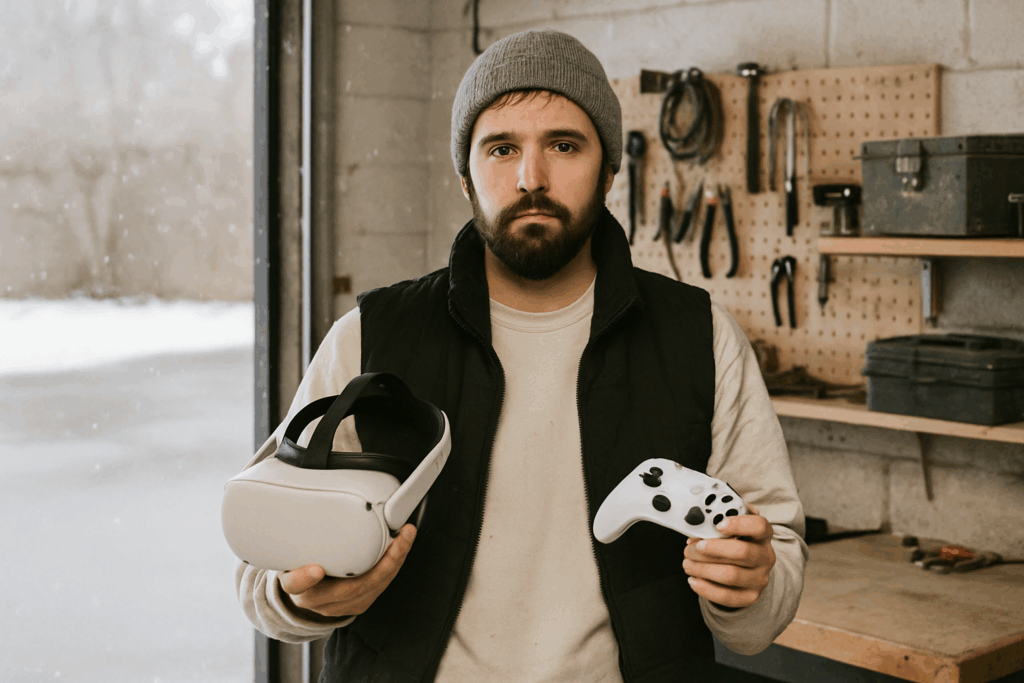
For years, VR was stuck in early adopter mode—expensive headsets, frustrating UX, and limited content. That’s changing fast. Hardware in 2024 is slimmer, lighter, and far more budget-friendly. You no longer need to be a tech obsessive or carry a charging brick in your bag to shoot or consume immersive content. This opens real doors for vloggers who want to experiment without dumping thousands into gear.
AR is also leveling up with smarter and more natural integrations. No more gimmicky overlays or filters that feel like distractions. Now, creators can project graphics, data, or interactive elements directly into real-world settings—making behind-the-scenes tours, DIY instructions, or even city walks pop with new layers of information.
What’s driving this acceleration? Headset releases from both legacy brands and newcomers are gaining steam, with faster iteration cycles and stronger API support for content creators. The signal is clear: mixed reality is no longer a someday thing. It’s here, and the tools are ready for creators willing to dive in and build.
Vlogging in 2024 isn’t just about filming—it’s about crafting layers of experience. The barrier to entry just got a whole lot lower.
Introduction
Vlogging isn’t fading—it’s adapting. Even with the explosion of new formats, tighter platform rules, and shifting viewer habits, vlogging has stayed stubbornly relevant. Why? Because people still connect with people. Audiences want something more than filters and trends: they want followable lives, honest storytelling, and content that feels human. Vlogging delivers that.
But 2024 isn’t playing on easy mode. Algorithms are tighter, attention spans are shorter, and tech tools are reshaping how creators work. What’s working now is a mix of sharp strategy and raw authenticity. Platforms reward creators who show up consistently, engage with their communities, and master multiple content styles.
If you’re vlogging like it’s 2019, you’re invisible. If you’re adapting—leaning into niche topics, short-form edits, AI help, and new posting rhythms—you’re in the game. This year, creators who understand the ecosystem and stay flexible will win. It’s not about going viral. It’s about staying visible.
Game Audio Levels Up: Sound Design Becomes a Storytelling Force
In 2024, sound design is no longer just background filler—it’s a defining element of game immersion. As gaming experiences grow more emotionally rich and narratively complex, audio is emerging as a powerful storytelling tool.
Spatial Audio Brings Emotional Realism
Breaking away from simple stereo sound, spatial audio techniques now allow players to be fully immersed in multidimensional environments. Whether it’s footsteps approaching from behind or distant echoes in an open world, well-designed spatial audio lets players feel what characters are experiencing—fear, awe, tension, or urgency.
- Enhances realism by mimicking how sound exists in the real world
- Creates deeper emotional connections with in-game events
- Heightens immersion without relying solely on visuals
Live Sound Mixing in Multiplayer Environments
Real-time sound mixing is becoming standard in competitive and cooperative multiplayer games. By adjusting audio levels on the fly based on player proximity, action intensity, or team coordination needs, live mixing ensures that players hear what matters most—when it matters most.
- Prioritizes key sounds like footsteps, voice chat, or enemy actions
- Supports better situational awareness during crucial gameplay moments
- Reduces chaos in loud firefights or cluttered environments
Original Soundtracks Drive Storytelling
Music isn’t just an afterthought—it’s being engineered alongside narrative arcs to reinforce emotional beats. Custom soundtracks are increasingly integrated into cinematic scenes, game mechanics, and character development, turning background scores into active narrative drivers.
- Original compositions align with character growth, mood shifts, and plot turns
- Dynamic soundtracks respond to player actions and choices
- Composers are becoming key collaborators in narrative development
Want to Dive Deeper?
For a closer look at why audio is gaining serious respect in game development, check out our deep dive article:
Sound Design in Games: Why Experts Say Audio Is Underrated
With game audio finally in the spotlight, creators have more tools than ever to shape how players feel—with or without a single line of dialogue.
Monetization Is Going DIY
Subscription Services: Battling for Player Loyalty
Game developers and publishers are leaning heavily into subscription-based models, aiming to solidify recurring revenue and long-term player commitment. But as more services flood the market, gamers are forced to choose which subscriptions are worth keeping.
- Major players like Xbox Game Pass, PlayStation Plus, and EA Play continue evolving their offerings
- Indie platforms are joining the mix, creating niche libraries for dedicated audiences
- The challenge: How many subscriptions will players actually maintain?
The Evolution of In-Game Economies
In-game economies are becoming more complex and more integral to gameplay. They’re no longer just about buying skins or upgrades—they’re networks of virtual value with real implications for a player’s time, experience, and financial investment.
- Dynamic pricing adjusts costs based on activity or engagement
- Virtual currencies are designed to increase retention and reward loyalty
- Marketplace mechanics create mini economies within games, giving players a sense of ownership
Fair Monetization vs. The Pay-to-Win Backlash
Players are growing increasingly wary of pay-to-win models that unbalance competitive gameplay. Studios must now walk a fine line between monetization and fairness.
- Cosmetic-only models are viewed more favorably
- Battle passes offering tiered progression continue to thrive—but only when well-balanced
- Transparency is key: players want to know what they’re paying for and why it matters in-game
Games that succeed in 2024 will prioritize trust and user experience over aggressive monetization. Creators and developers who respect their audience’s time and money will be the ones who build lasting communities.
AI is shaking up game development, and vloggers covering it are riding a wave of fresh, unpredictable content. AI-powered NPCs—non-playable characters—aren’t just repeating stock lines anymore. They’re reacting to player choices, learning patterns, and driving storylines forward in weirdly human ways. It’s turning gameplay into something closer to improv theater than pre-scripted quests.
Behind the scenes, devs are using AI for smarter testing and faster iteration. Bugs get squashed quicker, environments evolve on the fly, and world-building can respond dynamically to player input. All this means that games feel more alive—and that content creators always have something new to explore mid-playthrough.
As for AI-generated content, it’s not a full replacement for human creativity. It’s a tool, not a shortcut. Vloggers who use it wisely—say, to prototype ideas, auto-generate B-roll, or enhance post-production—are speeding up their workflow without selling out their voice. They’re not handing over the mic, just using better gear.
The vlogging ecosystem is pulling in more stakeholders than ever—and each has skin in the game. For gamers, 2024 is offering deeper, more customized experiences, with vloggers doubling as testers, curators, and community leaders. Content is richer, but so are the costs. Microtransactions, early access passes, and niche merch drops mean fans are paying for premium content more often than not.
On the creator side, developers are juggling new creative tools—from AI-assisted editing to dynamic overlays—but the pressure’s rising. Timelines are shorter. Expectations are higher. Demand for tight, polished content has turned solo editing into a team sport, pushing small creators to either scale up or fall behind.
For investors, the market looks hot—but only for those who get the backend. Algorithms, APIs, monetization splits, and data velocity—it’s all part of the stack now. Backing a vlogger in 2024 is less about charisma and more about infrastructure. The winners in this space aren’t just entertaining; they’re operationally sharp.
Adaptability Is the Edge
If there’s one trait separating the creators who last from the ones who fizzle out, it’s adaptability. The creators who win in 2024 are the ones who adjust on the fly—not just because of platform quirks, but because they’re tuned into how audiences shift, tech evolves, and trends accelerate.
Tech gives you tools, not talent. AI can help you edit faster or write outlines, sure. But it can’t replace insight, timing, or the gut sense of when to pivot. The best vloggers are treating tools like extensions—not replacements. They’re still calling the shots creatively.
Also: real pros aren’t just reacting to headlines. They dig into data, study what’s working, and notice quieter trends before they go mainstream. They’re less focused on viral noise and more on sustainable traction. Being early counts. But being elastic matters more.
 Aron Wrighthandier has opinions about gaming news and trends. Informed ones, backed by real experience — but opinions nonetheless, and they doesn't try to disguise them as neutral observation. They thinks a lot of what gets written about Gaming News and Trends, Upcoming Game Releases, Competitive Play Insights is either too cautious to be useful or too confident to be credible, and they's work tends to sit deliberately in the space between those two failure modes.
Reading Aron's pieces, you get the sense of someone who has thought about this stuff seriously and arrived at actual conclusions — not just collected a range of perspectives and declined to pick one. That can be uncomfortable when they lands on something you disagree with. It's also why the writing is worth engaging with. Aron isn't interested in telling people what they want to hear. They is interested in telling them what they actually thinks, with enough reasoning behind it that you can push back if you want to. That kind of intellectual honesty is rarer than it should be.
What Aron is best at is the moment when a familiar topic reveals something unexpected — when the conventional wisdom turns out to be slightly off, or when a small shift in framing changes everything. They finds those moments consistently, which is why they's work tends to generate real discussion rather than just passive agreement.
Aron Wrighthandier has opinions about gaming news and trends. Informed ones, backed by real experience — but opinions nonetheless, and they doesn't try to disguise them as neutral observation. They thinks a lot of what gets written about Gaming News and Trends, Upcoming Game Releases, Competitive Play Insights is either too cautious to be useful or too confident to be credible, and they's work tends to sit deliberately in the space between those two failure modes.
Reading Aron's pieces, you get the sense of someone who has thought about this stuff seriously and arrived at actual conclusions — not just collected a range of perspectives and declined to pick one. That can be uncomfortable when they lands on something you disagree with. It's also why the writing is worth engaging with. Aron isn't interested in telling people what they want to hear. They is interested in telling them what they actually thinks, with enough reasoning behind it that you can push back if you want to. That kind of intellectual honesty is rarer than it should be.
What Aron is best at is the moment when a familiar topic reveals something unexpected — when the conventional wisdom turns out to be slightly off, or when a small shift in framing changes everything. They finds those moments consistently, which is why they's work tends to generate real discussion rather than just passive agreement.