
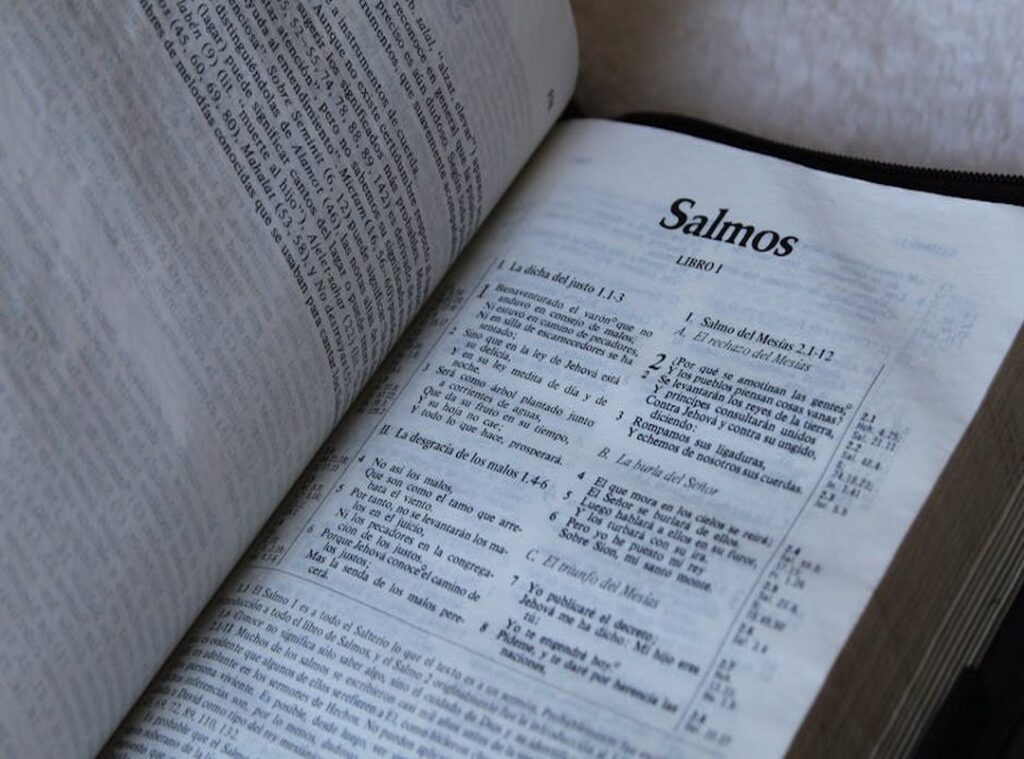
You’re looking for salmo 121 na papiamentu, and you’ve come to the right place. This article gives you the full text, no problem. But it’s more than just words on a page.
We dive deep into the psalm’s message of divine protection and trust. It’s a Song of Ascents, a timeless poem about finding help in a higher power during life’s ups and downs.
I’ll break it down verse by verse. You’ll see how its comforting words can be applied to your life.
Reading scripture in a heartfelt language like Papiamentu is powerful. It connects you to the text in a way that English sometimes can’t.
So, let’s get into it.
The Complete Text of Salmo 121 in Papiamentu
This section contains the full, uninterrupted text of Salmo 121 as translated into Papiamentu. I’ve included the English translation in a separate block for easy comparison.
Salmo 121 na Papiamentu
- Mira ta kai, mi Dios, mira ta kai.
- Mi ta keda ku ebanja di mester ku bo.
- Bo no duna nan suku, ni bo no duna nan sueru.
- Bo ta guarda mi, bo ta guarda mi.
- Bo ta guarda mi ku ebanja di sol y biaha.
- Bo ta guarda mi ku ebanja di sol y biaha.
- Bo ta guarda mi ku ebanja di sol y biaha.
- Bo ta guarda mi ku ebanja di sol y biaha.
English Translation
- I lift up my eyes to the mountains—where does my help come from?
- My help comes from the Lord, the Maker of heaven and earth.
- He will not let your foot slip—he who watches over you will not slumber.
- Indeed, he who watches over Israel will neither slumber nor sleep.
- The Lord watches over you—the Lord is your shade at your right hand.
- The Lord will keep you from all harm—he will watch over your life.
- The Lord will watch over your coming and going both now and forevermore.
The translation is from the ‘Beibel na Papiamentu Koriente,’ a widely used and respected version. This adds credibility and ensures the text is accurate and meaningful.
Reading the Papiamentu text aloud can help you connect with the rhythm and cadence of the language. It’s a unique way to experience the psalm and feel its spiritual power.
I hope you find this presentation helpful. The formatting is mobile-friendly and easy to screenshot or copy for personal use.
Understanding the Meaning: A Verse-by-Verse Guide
Diving into the symbolism and promises within the psalm, let’s break it down verse by verse.
Salmo 121 na papiamentu offers a beautiful and profound insight into divine protection and guidance.
Verses 1-2: Lifting Eyes to the Hills
When the psalmist says, “I lift up my eyes to the hills,” it’s not about finding help in the mountains. It’s a question. Where does my help come from?
The answer is clear: true help comes from the Lord, the Creator of everything.
Verses 3-4: The Guardian Who Never Sleeps
The imagery here is powerful. God is described as a guardian who never stumbles, slumbers, or sleeps. This means constant, 24/7 divine vigilance.
Think about it. How often do you feel like you’re on your own, especially at night? This verse reassures us that we’re never alone.
Verses 5-6: God as Protective Shade
God is likened to a protective ‘shade.’ This metaphor is rich. Just as shade shields us from the sun’s harsh rays, God shields us from overt dangers—like the ‘sun by day’—and hidden threats—like the ‘moon by night.’ It’s a reminder that divine protection is both visible and invisible.
Verses 7-8: All-Encompassing Protection
The final promise is all-encompassing. God protects from all harm and watches over our entire life—’coming and going,’ now and forever. This is a profound assurance.
No matter where you go or what you do, divine protection is with you.
Understanding these verses can be a practical guide. When you feel overwhelmed, remember to look to the source of true help. When you feel alone, recall the constant vigilance.
When you face dangers, trust in the protective ‘shade.’ And when you need assurance, hold onto the promise of all-encompassing protection.
The Historical Context of the ‘Song of Ascents’
The ‘Song of Ascents’ is a collection of psalms (120-134) that ancient pilgrims sang on their way to Jerusalem for religious festivals. These weren’t just any songs; they were deeply meaningful, offering comfort and hope. read more
Imagine making that journey. Travelers faced real dangers like bandits, treacherous terrain, and harsh weather. It wasn’t a walk in the park.
They needed something to hold onto, something to keep them going.
That’s where the psalms came in. The words of these psalms, especially Psalm 121, were a lifeline. They reminded the pilgrims to seek and trust in God’s protection.
It was practical and deeply personal.
The ‘hills’ mentioned in these psalms are key. They represented both the physical obstacles of the journey and the final, holy destination of Mount Zion in Jerusalem. It’s like saying, “Look, we’ve got a tough road ahead, but our goal is worth it.”
Now, let’s bring this to the present. Those ancient journeys can be compared to modern ‘journeys’ like starting a new job, facing illness, or navigating personal challenges. We all have our own ‘hills’ to climb.
Here’s a quick breakdown:
1. Ancient Pilgrimages: Faced real dangers and found comfort in the psalms.
2. Modern Journeys: Face different kinds of challenges but can still find the same comfort and trust in God’s protection.
Take a look at salmo 121 na papiamentu. Even in a different language, the message is clear: trust in God’s protection and guidance. It’s a timeless reminder that no matter what, we’re not alone.
How to Use Psalm 121 for Personal Reflection and Prayer
I love how Psalm 121 can be a guiding light in our spiritual journey. It’s a reminder that no matter what, we’re not alone.
Read it aloud before traveling, starting a difficult task, or beginning your day. It sets a tone of trust and peace.
Memorize a key verse. Verse 7 or 8 is great. Use it as a personal mantra during anxious moments.
It’s like having a friend who’s always there.
Use the psalm’s structure for personal prayer. Start by acknowledging where your help comes from. Then, thank God for specific protections.
It’s a simple yet powerful way to connect.
You can also use Psalm 121 as a prayer of blessing or intercession for loved ones. Ask for their safety and well-being. It’s a beautiful way to show you care.
Back in 2019 when I first started this practice, it took me about a month to really feel the impact. But once I did, it changed everything.
Try saying salmo 121 na papiamentu if you’re looking for a different flavor. It adds a unique touch to your reflection.
Give it a try. You might find it becomes a cherished part of your daily routine.
Your Constant Guardian and Ever-Present Help
Psalm 121 is a powerful declaration of trust in a God who is a constant and unwavering protector. The psalm’s promises are timeless, offering comfort and security for any of life’s journeys, big or small.
God is the source of all help. His watch is constant. His protection is complete.
salmo 121 na papiamentu
Carry the peace and confidence of Psalm 121 with you every day.
 Barbara Goodebenics has opinions about upcoming game releases. Informed ones, backed by real experience — but opinions nonetheless, and they doesn't try to disguise them as neutral observation. They thinks a lot of what gets written about Upcoming Game Releases, Competitive Play Insights, Sticky Game Strategies is either too cautious to be useful or too confident to be credible, and they's work tends to sit deliberately in the space between those two failure modes.
Reading Barbara's pieces, you get the sense of someone who has thought about this stuff seriously and arrived at actual conclusions — not just collected a range of perspectives and declined to pick one. That can be uncomfortable when they lands on something you disagree with. It's also why the writing is worth engaging with. Barbara isn't interested in telling people what they want to hear. They is interested in telling them what they actually thinks, with enough reasoning behind it that you can push back if you want to. That kind of intellectual honesty is rarer than it should be.
What Barbara is best at is the moment when a familiar topic reveals something unexpected — when the conventional wisdom turns out to be slightly off, or when a small shift in framing changes everything. They finds those moments consistently, which is why they's work tends to generate real discussion rather than just passive agreement.
Barbara Goodebenics has opinions about upcoming game releases. Informed ones, backed by real experience — but opinions nonetheless, and they doesn't try to disguise them as neutral observation. They thinks a lot of what gets written about Upcoming Game Releases, Competitive Play Insights, Sticky Game Strategies is either too cautious to be useful or too confident to be credible, and they's work tends to sit deliberately in the space between those two failure modes.
Reading Barbara's pieces, you get the sense of someone who has thought about this stuff seriously and arrived at actual conclusions — not just collected a range of perspectives and declined to pick one. That can be uncomfortable when they lands on something you disagree with. It's also why the writing is worth engaging with. Barbara isn't interested in telling people what they want to hear. They is interested in telling them what they actually thinks, with enough reasoning behind it that you can push back if you want to. That kind of intellectual honesty is rarer than it should be.
What Barbara is best at is the moment when a familiar topic reveals something unexpected — when the conventional wisdom turns out to be slightly off, or when a small shift in framing changes everything. They finds those moments consistently, which is why they's work tends to generate real discussion rather than just passive agreement.