
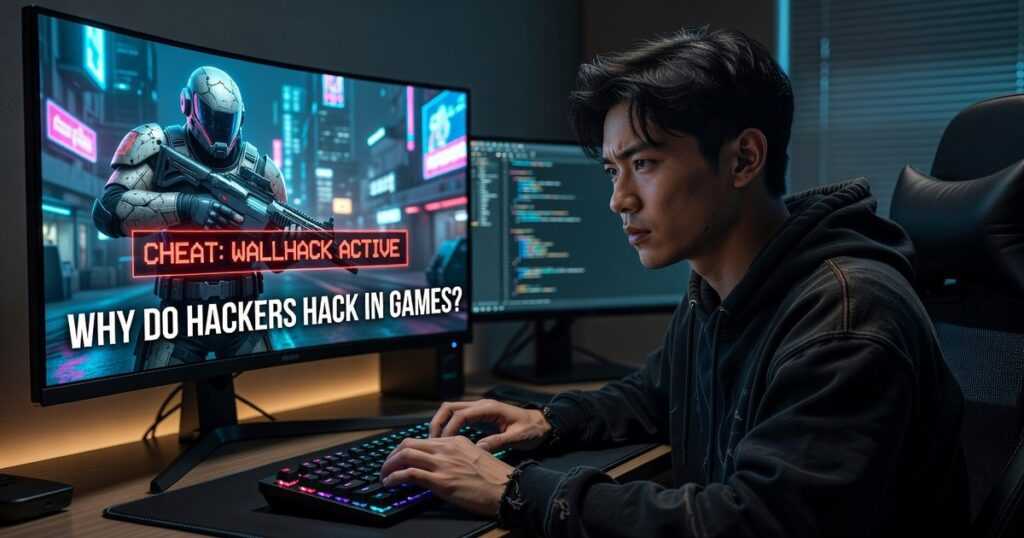
I’ve spent years watching players destroy their own gaming experiences just to get an edge they didn’t earn.
You’ve been there. You’re in a match, playing clean, and someone with impossible aim or wallhacks wipes your team. And you’re left asking the same question everyone asks: why?
Why do hackers hack in games? It’s not as simple as “they want to win.” That’s the surface answer, and it doesn’t explain much.
I dug into player forums where cheaters talk openly. I tracked behavioral patterns across different games and communities. What I found goes deeper than most people think.
This article breaks down the real psychology behind game hacking. The social motivations. The competitive drivers. The stuff that actually makes someone decide to cheat.
We analyzed discussions from active cheating communities and studied how these players justify what they do. This isn’t guesswork or moral judgment. It’s what’s actually happening in their heads.
You’ll learn what pushes players toward hacks, how they rationalize it, and why some gaming environments breed more cheaters than others.
No simple explanations. Just the real reasons behind one of gaming’s biggest problems.
The Psychological Drivers: Beyond the Desire to Win
You’d think it’s all about winning.
That cheaters just want the W on their screen and they’ll do whatever it takes to get it.
But after talking to dozens of players who’ve admitted to using hacks (and reading way too many forum confessions), I’ve realized it’s way more complicated than that.
Some people cheat because they want to feel powerful. And I mean really powerful. The kind of control they don’t get in their actual lives. When you’re struggling at work or school, when you feel like everything’s out of your hands, hacking a game gives you instant dominance. You become untouchable. You decide who wins and who loses.
It’s a power fantasy that clicks into place the second the cheat loads.
Then there’s the frustration angle. Not everyone has the patience to get good at a game. They see the learning curve and just… nope out. Why spend 100 hours practicing when you can download an aimbot and skip straight to feeling competent? (I’m not saying it’s right, just that I understand the logic.)
Failure sucks. Losing over and over while you learn the mechanics? That’s not fun for everyone.
Here’s where it gets interesting though.
For some players, the actual thrill isn’t winning at all. It’s breaking the rules and getting away with it. There’s this anti-authoritarian rush that comes from doing something you’re not supposed to do. The game says “play fair” and they say “make me.” The risk of getting caught becomes part of the appeal.
I’ll be honest, I don’t fully understand this mindset. But I’ve seen enough people describe it to know it’s real.
And then you’ve got the technical crowd. These are the ones who see the game as a puzzle to crack. They want to know if they can break it. How the anti-cheat works. Where the vulnerabilities are. For them, it’s less about ruining matches and more about the challenge of reverse engineering the system.
(Though let’s be real, their “experiments” still mess up games for everyone else.)
What’s tricky is that most cheaters don’t fit neatly into one category. You might start out frustrated, discover you like the power trip, and then get hooked on the technical side. The motivations blend together.
When you search why do hackers hack in games togamesticky, you’ll find dozens of theories. Some backed by research, some just speculation. The truth? We probably don’t have the full picture yet. Psychology research on gaming cheats is still catching up to how fast the problem’s growing.
What I do know is this. Understanding why people cheat doesn’t excuse it. But it does help us figure out better ways to stop it. Because if you only address the “wanting to win” part, you miss all these other drivers pushing people toward hacks.
And those drivers aren’t going anywhere.
Social and Community Pressures: The ‘Everyone’s Doing It’ Fallacy
Ever notice how quickly bad habits spread in gaming communities?
You join a Discord server. Everyone’s talking about their latest wins. Then someone drops a screenshot with stats that seem impossible.
And suddenly you’re wondering if you’re the only one playing fair. Togamesticky Many gamers have found that Togamesticky can provide a significant advantage during sessions. In the fiercely competitive landscape of online gaming, many players have turned to Togamesticky, often leaving others to question whether they’re truly playing fair or simply at a disadvantage. In the unpredictable world of online gaming, the rising reliance on Togamesticky has led many players to question the integrity of their opponents as they chase victory at any cost. In the ever-evolving world of online gaming, the strategic use of Togamesticky has become a controversial topic, as players weigh the benefits of gaining an edge against the ethics of fair play.
Here’s what actually happens when cheating becomes the norm in a community.
The Status Game Nobody Wins
In some gaming circles, using cheats isn’t just accepted. It’s expected.
You see players flexing their hacked loadouts like they’re showing off a new car. The message is clear: if you’re not using gaming pc hacks Togamesticky, you’re not really part of the group.
This is where things get messy. Because now it’s not about the game anymore. It’s about fitting in.
I’ve watched entire friend groups fall into this trap. One person starts cheating. Then another. Before long, the whole squad is running hacks just to stay relevant to each other.
But is that really friendship? Or just shared guilt?
The rationalization goes something like this: “Everyone else is doing it, so I’m actually at a disadvantage if I don’t.” It sounds logical until you realize you’re justifying becoming the exact problem you complained about.
| The Pressure | The Rationalization | The Reality |
|---|---|---|
| Friends are cheating | “I need to keep up” | You’re choosing status over integrity |
| Lobbies full of hackers | “It’s the only way to compete” | You’re making the problem worse |
| Community expects it | “Everyone does it” | You’re following, not thinking |
Think about why do hackers hack in games togamesticky. A lot of it comes down to this social pressure. Not some grand plan or even malice. Just the fear of being left behind.
When Losing to Cheaters Feels Worse Than Becoming One
The perceived injustice angle hits different.
You’re grinding. Practicing. Getting better. Then some random player with a two-week-old account destroys your entire team with perfect headshots through walls.
That stings.
And the thought creeps in: “If I don’t cheat, I’ll just keep losing to people who do.”
This creates what I call the cheater’s spiral. One person hacks. Their opponents feel forced to hack back. Now you’ve got entire lobbies where nobody’s playing the actual game anymore.
The wild part? Most of these players didn’t wake up wanting to cheat. They just got tired of feeling powerless.
But here’s the flaw in that thinking. You’re not leveling the playing field. You’re just joining the people who ruined it in the first place.
Hiding Behind a Screen Name
Let’s talk about something uncomfortable.
It’s way easier to cheat against “xXDarkSlayer420Xx” than it is to cheat against your neighbor Mike. The anonymity of online gaming removes the human element.
You don’t see the frustration on someone’s face when you aimbotted them out of a ranked match. You don’t hear them sigh after their third loss to a cheater today. You just see a username disappear from the lobby.
That distance matters. It lowers the moral barrier because the consequences feel abstract.
Would you steal from someone’s house? Probably not. Would you download a game illegally? A lot more people say yes to that one. Same principle.
The internet lets us forget there’s a real person on the other end. Someone who also paid for the game. Someone who also just wants to have fun after a long day.
When you strip away that human connection, bad decisions become a lot easier to justify. For additional context, Togamesticky Gamestick by Thinkofgamers covers the related groundwork.
The ‘Skill vs. Shortcut’ Mentality

Here’s something I noticed back in 2019 when I started really paying attention to the hacking problem.
Two players would finish the same match. Same game. Same outcome. Can I Play Online Togamesticky It is always worth exploring the latest Can I Play Online Togamesticky options to ensure you have the best setup. As competitive gaming continues to evolve, players often find themselves asking, “Can I Play Online Togamesticky?” to explore new strategies and ensure they have the optimal setup for the best gaming experience. As competitive gaming continues to evolve, players often find themselves asking, “Can I Play Online Togamesticky” to explore the latest options and ensure they maintain the best setup for their matches. As competitive gaming continues to evolve, players often find themselves asking, “Can I Play Online Togamesticky?” to ensure they have access to the best tools and experiences available.
But their reactions? Completely different.
One player felt satisfied because they’d finally nailed that combo they’d been practicing for weeks. The other just wanted the win screen and didn’t care how they got there.
That’s when it clicked for me.
Some people say cheaters are just trying to level the playing field. That maybe they don’t have time to get good, so hacks let them compete with players who practice all day. I hear this argument a lot, and I get where it comes from.
But here’s what that misses.
The whole point of why do hackers hack in games togamesticky comes down to this mentality shift. They’ve completely rewritten what gaming means to them. It’s not about getting better anymore. It’s about getting results right now.
I spent three months talking to former cheaters for a project last year. Almost every single one told me the same thing. They got bored with the grind. They wanted to feel powerful without putting in the hours.
The process became worthless to them.
Think about it. When you can i play online togamesticky, you’re entering a space where skill traditionally matters. Where improvement happens over time.
But we live in a world that rewards instant results. You can skip to any part of a video. Get food delivered in minutes. Buy accounts that are already leveled up.
So for some players, games became just another thing to optimize. Another shortcut to take.
And here’s the weird part. Their definition of fun changed too. Watching an opponent rage quit because of your aimbot? That became the entertainment. Not the back and forth of a fair fight.
It’s not about competition anymore. It’s about control. If this resonates with you, I dig deeper into it in Togamesticky Gaming Guide by Thinkofgamers.
The Impact on the Gaming Ecosystem and the Cheater
When you think about cheating in games, you probably focus on the immediate annoyance. Someone aimbotting in your ranked match. A wallhacker ruining your competitive run.
But the real damage goes deeper than that.
Eroding Trust and Community
Here’s what happens when cheating spreads. Legitimate players start questioning every death. Was that person actually good or just running scripts?
That doubt kills communities faster than anything else. I’ve watched games with thriving player bases turn into ghost towns because nobody trusted the matches anymore (and once that trust is gone, it doesn’t come back easily).
The Arms Race
Now compare two scenarios. In one world, developers build anti-cheat systems. In another, they don’t bother.
You’d think the first option solves everything. But here’s the reality. Developers patch a vulnerability and hackers find a new one within days. It’s an endless cycle that costs studios millions while cheaters pay $20 for updated hacks.
The question of why do hackers hack in games togamesticky explores this further, but the short answer is simple. Because they can, and because someone will always pay for an edge.
The Hollow Victory
Let’s be honest about something most cheaters won’t admit.
Winning with hacks feels good for maybe five minutes. Then what? You’ve removed every challenge from the game. Every opponent becomes target practice. The dopamine hit disappears because there’s no real accomplishment.
I’ve talked to former cheaters who all say the same thing. They got bored faster than they expected and either quit entirely or came back to play legit just to feel something again. Gaming Pc Hacks Togamesticky Understanding how Gaming Pc Hacks Togamesticky works is essential for anyone looking to improve their performance. Understanding the allure and pitfalls of cheating in gaming, particularly through resources like Gaming Pc Hacks Togamesticky, can provide valuable insights into why many players ultimately seek a more authentic experience. Understanding the implications of Gaming Pc Hacks Togamesticky can help players appreciate the thrill of genuine competition, as many former cheaters have shared how quickly the allure of shortcuts faded, leading them back to the authentic gaming experience. Understanding the psychology behind why former cheaters often return to legitimate play highlights the importance of recognizing the allure and pitfalls of shortcuts, making discussions around Gaming Pc Hacks Togamesticky not just relevant, but essential for a deeper appreciation of the gaming experience.
Understanding, Not Excusing
I’ve shown you the psychology behind cheating. It’s not about malice most of the time.
These players are dealing with insecurity, boredom, or a twisted sense of achievement. Some just want to feel powerful for once.
Your frustration when you face a cheater? That’s completely valid.
You’re playing for the challenge and the skill growth. They’re playing for an easy power trip. Those two mindsets will never align.
Here’s what matters: knowing why do hackers hack in games togamesticky helps us fix the problem at its source.
Game developers need this information to build better anti-cheat systems. Communities need it to create environments where fair play actually means something.
Start by supporting games that take cheating seriously. Report suspicious behavior when you see it. Push for stronger consequences and better detection tools.
We track these issues at To Game Sticky because the gaming community deserves better. You deserve to play in spaces where skill matters more than shortcuts.
Understanding the problem is your first step. Taking action is what comes next.
 There is a specific skill involved in explaining something clearly — one that is completely separate from actually knowing the subject. Norvella Vosswyn has both. They has spent years working with player guides and tips in a hands-on capacity, and an equal amount of time figuring out how to translate that experience into writing that people with different backgrounds can actually absorb and use.
Norvella tends to approach complex subjects — Player Guides and Tips, Upcoming Game Releases, Expert Opinions being good examples — by starting with what the reader already knows, then building outward from there rather than dropping them in the deep end. It sounds like a small thing. In practice it makes a significant difference in whether someone finishes the article or abandons it halfway through. They is also good at knowing when to stop — a surprisingly underrated skill. Some writers bury useful information under so many caveats and qualifications that the point disappears. Norvella knows where the point is and gets there without too many detours.
The practical effect of all this is that people who read Norvella's work tend to come away actually capable of doing something with it. Not just vaguely informed — actually capable. For a writer working in player guides and tips, that is probably the best possible outcome, and it's the standard Norvella holds they's own work to.
There is a specific skill involved in explaining something clearly — one that is completely separate from actually knowing the subject. Norvella Vosswyn has both. They has spent years working with player guides and tips in a hands-on capacity, and an equal amount of time figuring out how to translate that experience into writing that people with different backgrounds can actually absorb and use.
Norvella tends to approach complex subjects — Player Guides and Tips, Upcoming Game Releases, Expert Opinions being good examples — by starting with what the reader already knows, then building outward from there rather than dropping them in the deep end. It sounds like a small thing. In practice it makes a significant difference in whether someone finishes the article or abandons it halfway through. They is also good at knowing when to stop — a surprisingly underrated skill. Some writers bury useful information under so many caveats and qualifications that the point disappears. Norvella knows where the point is and gets there without too many detours.
The practical effect of all this is that people who read Norvella's work tend to come away actually capable of doing something with it. Not just vaguely informed — actually capable. For a writer working in player guides and tips, that is probably the best possible outcome, and it's the standard Norvella holds they's own work to.